
Unintended Consequences

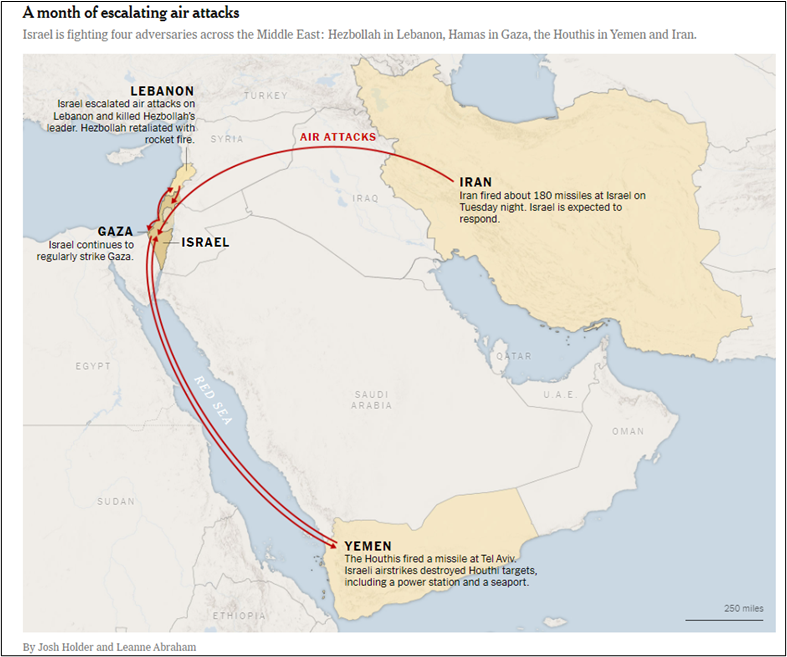
Iran is in the news – again – this week, as the Hamas-Israel war threatens to expand to engulf more countries. The United States and its allies have been at odds with Iran for decades, and there is no prospect of hostilities lessening any time soon. But I’m not going to write about the current situation in Iran today. Instead, I want to write about the before times – when Iran was a strong ally of the West and a beacon of economic and social development in the Middle East.
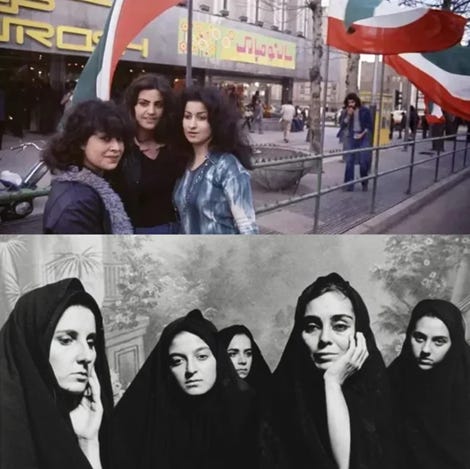
Let’s look back to see how these changes came about.
At the end of World War II, Iran was a critical geopolitical player due to its strategic location and its oil resources, attracting the attention of both the Allied and Axis powers. The period marked a significant moment in Iran's modern history as it experienced foreign occupation, political instability, and the seeds of future conflict.
Iran's importance to the Allied war effort came to the forefront in 1941, when British and Soviet forces invaded the country. Their main goal was to secure supply lines, particularly the "Persian Corridor," which allowed Allied supplies to flow from the Persian Gulf to the Soviet Union. Additionally, the Allies wanted to prevent Nazi Germany from gaining influence in Iran, especially given Iran's sympathy for the Axis powers and its pro-German monarch, Reza Shah Pahlavi.
As a result of the invasion, Reza Shah was forced to abdicate on September 16, 1941, under pressure from the British and Soviets. He was replaced by his son, Mohammad Reza Pahlavi, who assumed the throne. This marked the beginning of Mohammad Reza Shah’s reign, though his power was initially limited due to foreign occupation and internal challenges.
During the war, Tehran was the site of a significant meeting between the "Big Three" Allied leaders—Winston Churchill, Franklin D. Roosevelt, and Joseph Stalin—in November 1943. The Tehran Conference focused on strategies for the final defeat of Nazi Germany, but Iran's future was also discussed. The Allies promised to respect Iran's independence and sovereignty and withdraw their forces after the war, though this promise would later face complications.
The war strained Iran’s economy. The occupation disrupted trade, and inflation soared. Many Iranians faced food shortages and poverty, while the presence of foreign troops led to social unrest and anti-occupation sentiment.
After the war, Iran emerged as a point of conflict between Russia and its former Western allies. Soviet forces were reluctant to leave northern Iran, particularly the Azerbaijan region, where they had encouraged the establishment of a pro-Soviet autonomous government. This created a major post-war crisis known as the Iran Crisis of 1946, as Iran's sovereignty was at risk. The United States, under President Harry Truman, took a strong stance against Soviet expansion, leading to diplomatic pressure and eventually Soviet withdrawal in 1946. This was one of the early confrontations of the Cold War.
Iran’s vast oil reserves also attracted significant attention, especially from the British, who controlled the Anglo-Iranian Oil Company (AIOC). The struggle for control over Iran’s oil resources would continue into the following years, ultimately leading to the nationalization of the oil industry in the early 1950s under Prime Minister Mohammad Mossadegh. The nationalization of the oil industry meant that the profits from this extremely important industry would stay in Iran rather than accrue to the AIOC.
To complicate this issue, the end of World War II saw a rise in Iranian nationalism and political mobilization, with various factions—including the communist Tudeh Party—gaining influence. The young Mohammad Reza Shah faced challenges from nationalists, leftists, and religious leaders, all of whom were vying for influence in post-war Iran. This period of political instability would lay the groundwork for future conflicts, including the 1953 coup supported by the CIA and MI6 that toppled Mossadegh.
In the early 1950s, Iran’s politics were marked by the rising influence of nationalist movements, particularly that of Prime Minister Mohammad Mossadegh, who sought to nationalize the Iranian oil industry, which was controlled by the British. In 1951, Mossadegh succeeded in passing legislation to nationalize the Anglo-Iranian Oil Company, sparking a major confrontation with Britain and leading to a blockade of Iranian oil exports. Nationalizing the oil industry meant that the profits of the industry would be retained in Iran rather than going to the original British owners of the business.
This culminated in a coup in 1953, orchestrated by the British and U.S. governments (through Operation Ajax), which resulted in Mossadegh's removal and the consolidation of the Shah's power. With American backing, Mohammad Reza Shah began a program of rapid modernization and westernization. His “White Revolution” of the 1960s aimed to reform land ownership, improve women's rights, and industrialize the country. However, these reforms were met with growing discontent, particularly from the clergy, who viewed the Shah’s policies as un-Islamic and alien to Iranian traditions.
It’s not hard to understand why Iran’s nationalist came to despise Britiain the United States, which had sponsored a coup to oust their democratically elected Prime Minister to protect their oil investments
By the 1970s, dissatisfaction with the Shah's authoritarian rule, widespread corruption, and perceived western puppet status led to increasing unrest. Economic disparity, rapid urbanization, and political repression fueled opposition from a broad spectrum of Iranian society, including leftists, nationalists, and religious conservatives. Among the most vocal critics was Ayatollah Ruhollah Khomeini, a Shi’a cleric exiled for his opposition to the Shah.
In 1978, mass protests and strikes paralyzed the country. The situation spiraled out of control, and by early 1979, the Shah fled Iran and sought refuge in the United States — ostensibly for medical treatments (he had lymphoma). President Carter begrudgingly allowed the Shah to get medical treatment in the US, which stimulated further Iranian outrage at “The Great Satan.” Khomeini returned from exile and led the revolution that toppled the monarchy, resulting in the establishment of the Islamic Republic of Iran in April 1979 after a national referendum. This new regime was based on a theocratic system where ultimate authority rested with the Supreme Leader, a position Khomeini himself assumed.
In that same year, the Iranian Hostage Crisis unfolded when militant Iranian students, aligned with the ideals of the Islamic Revolution led by Ayatollah Khomeini, seized the U.S. Embassy in Tehran on November 4. The students, protesting America's support for the recently deposed Shah Mohammad Reza Pahlavi and its perceived interference in Iranian affairs, took 52 American diplomats and citizens hostage. The crisis lasted for 444 days, becoming a symbol of the deep animosity between the U.S. and the new Islamic regime. The event severely strained U.S.-Iran relations and contributed to the collapse of President Jimmy Carter’s administration. The hostages were finally released on January 20, 1981, coinciding with the inauguration of President Ronald Reagan.
The revolution was soon followed by internal power struggles and external conflicts. In 1980, Iraq, under Saddam Hussein, invaded Iran, aiming to seize control of border territories and assert dominance in the region. The Iran-Iraq War (1980-1988) became one of the longest and most brutal conflicts of the 20th century, with heavy casualties on both sides. The war ended in a stalemate, with neither country making significant territorial gains.
Following Khomeini’s death in 1989, Ayatollah Ali Khamenei succeeded him as Supreme Leader. The 1990s saw the beginning of efforts to rebuild the country after the war. During the presidency of Mohammad Khatami (1997-2005), there was a brief period of political reform and increased openness, but these changes were limited by the conservative establishment.
The election of Mahmoud Ahmadinejad in 2005 marked a return to hardline policies, both domestically and internationally, particularly with regards to Iran's nuclear program, which raised tensions with Western countries. Ahmadinejad’s re-election in 2009 sparked the Green Movement, a massive protest against alleged electoral fraud, but it was ultimately suppressed.
Since then, Iran has continued to face internal and external challenges, including sanctions, regional conflicts, and economic struggles. The 2015 nuclear deal briefly eased tensions with the West, but the U.S. withdrawal from the agreement in 2018 renewed hostilities. Despite ongoing protests and calls for reform, the Islamic Republic remains firmly in place, with the clergy maintaining control over the country’s political system.
With the US Presidential Election a month away, the increase in turmoil in the world’s hot spots (Ukraine and the Middle East) creates uncertainty about what the future holds, no matter who wins the election. However, because we know how the two most recent administrations – #P01135809 and Biden – approached these issues, it’s not hard to project what is likely to happen after the election.
The #P01135809 and Biden administrations took sharply different approaches to dealing with Iran, particularly regarding the 2015 Joint Comprehensive Plan of Action (JCPOA), commonly known as the Iran nuclear deal, and broader diplomatic and economic relations.
The #P01135809 administration adopted a hardline stance toward Iran, centered around a policy of "maximum pressure." Key elements of #P01135809’s approach included:
Withdrawal from the JCPOA: In May 2018, President #P01135809 unilaterally withdrew the U.S. from the JCPOA, which had been negotiated under the Obama administration. #P01135809 criticized the deal for being too lenient and for not addressing Iran's ballistic missile program or its regional activities in places like Syria, Iraq, and Yemen.
Reimposing and Expanding Sanctions: After withdrawing from the nuclear deal, the U.S. reimposed stringent economic sanctions on Iran, targeting its banking, energy, and shipping sectors. These sanctions severely damaged Iran’s economy, particularly its oil exports.
Targeted Military Actions: Tensions between the U.S. and Iran escalated under Trump, most notably with the killing of Qassem Soleimani, the commander of Iran's Quds Force, in a January 2020 drone strike in Baghdad. This led to a retaliatory missile attack by Iran on U.S. bases in Iraq, heightening fears of broader conflict.
Diplomatic Isolation: The #P01135809 administration sought to isolate Iran diplomatically, working closely with Israel and Gulf Arab states (Saudi Arabia and the UAE) to counter Iran’s regional influence. This policy included supporting the **Abraham Accords**, which normalized relations between Israel and several Arab states, in part to form a united front against Iran.
The Biden administration took a more diplomatic approach, focusing on restoring the JCPOA and de-escalating tensions. Key aspects include:
Efforts to Revive the JCPOA: President Biden sought to return to the nuclear agreement, seeing it as the best way to prevent Iran from acquiring nuclear weapons. However, negotiations—mostly indirect, through European intermediaries—proved difficult, as both sides demanded concessions. Iran insisted that all U.S. sanctions be lifted first, while the U.S. wanted Iran to reverse its nuclear advancements.
Maintaining Sanctions but Offering Diplomacy: While pursuing diplomacy, the Biden administration maintained many of Trump’s sanctions, especially targeting Iran’s Revolutionary Guard Corps (IRGC) and economic sectors. This dual-track policy aimed to keep pressure on Iran while engaging in nuclear negotiations.
Middle East Diplomacy and Regional Balance: The Biden administration tried to balance outreach to Iran with reassurance to key allies, especially Israel and Gulf states. Though Biden emphasized diplomacy, he made clear that the U.S. would not tolerate Iran’s nuclear ambitions or its destabilizing activities in the region. In 2023, Biden supported a Saudi-Iran détente brokered by China, recognizing the need for a stable Middle East.
Tensions over Regional Issues: Despite attempts at diplomacy, U.S.-Iran relations remained strained under Biden due to Iran’s continued support for proxy groups in the region, its missile and drone programs, and its internal repression, especially during the protests sparked by the death of Mahsa Amini in 2022.
In summary, the #P01135809 administration pursued a confrontational, sanctions-heavy strategy aimed at crippling Iran economically and militarily, while the Biden administration sought a return to diplomacy through the JCPOA, even as it maintained pressure on Iran over its regional activities and nuclear program.
One of the charges made against the Biden/Harris Administration during this year’s presidential campaign is that President Biden gave Iran millions of dollars and that this has allowed Iran to attack Israel. As you might expect, that’s not the entire story.
President Biden did not directly "return millions of dollars" to Iran, but there was a notable financial exchange in 2023 related to a diplomatic agreement involving the release of American hostages held in Iran.
In September 2023, the U.S. and Iran reached a deal to release five Americans detained in Iran. As part of this agreement, approximately $6 billion in Iranian oil revenue, previously frozen in South Korea due to U.S. sanctions, was transferred to accounts in Qatar. These funds were released with the understanding that they would be used strictly for humanitarian purposes, such as food and medicine, under Qatari supervision. The money was not "returned" as a direct payment to the Iranian government, but rather allowed for humanitarian transactions.
The $6 billion had been frozen in South Korea as a result of U.S. sanctions, which had been reimposed following the #P01135809 administration's withdrawal from the 2015 Iran nuclear deal (JCPOA). Iran had earned this money through legal oil sales before sanctions were reinstated, but the funds were inaccessible due to the sanctions on financial transactions with Iran.
The decision to unfreeze these funds as part of the prisoner swap was controversial. Critics argued that it amounted to a concession to Iran, potentially freeing up other resources for its government, which has a history of funding militant groups and regional destabilization. The Biden administration defended the arrangement, emphasizing that the funds were being transferred under strict humanitarian use guidelines and that this was part of efforts to secure the safe return of U.S. citizens held in Iran.
Thousands of years of history and misery in that part of the world. Thank you for reminding me of our involvement. And thank you for referring to it as the Hamas-Israel war instead of the other way around as the press calls it.