
Tribunus

Two weeks ago I wrote about Robert Bolling, who wrote under the pseudonym Phocion for the Virginia Gazette. Today I want to write about Tribunus, whose articles on Page One of the Gazette on October 6, 1774, contain a lot of meat about the relationship between Virginia and Parliament at this perilous time.
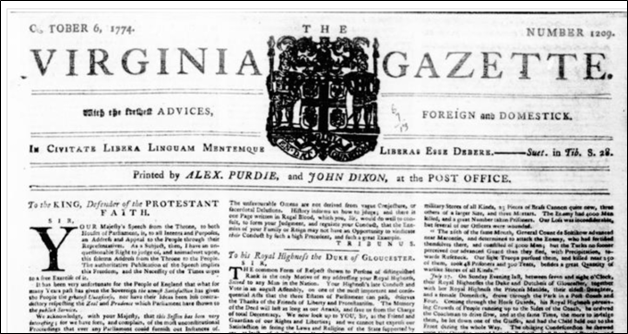
Writing these essays has given me the opportunity to reflect on the fact that people who were very important at the time – people like Tribunus, as I’ll explain below – are not always kept in the public memory as the years go by. We should keep that in mind as we go about our lives. We’re not all that important.
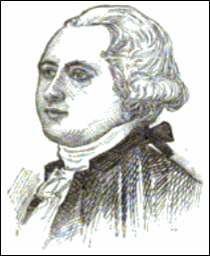
Tribunus was the pseudonym used by Arthur Lee of the famous Lee family of Virginia. This is what Wikipedia has to say about the Lee family:
Members of the family include:
Thomas Lee (1690–1750), a founder of the Ohio Company and a member of the Virginia House of Burgesses;
Francis Lightfoot Lee (1734–1797) and Richard Henry Lee (1732–1794), signers of the American Declaration of Independence, with Richard Lee also serving as one of Virginia's inaugural U.S. Senators;
Henry "Light-Horse Harry" Lee (1756–1818), lieutenant colonel in the Continental Army and Governor of Virginia;
Thomas Sim Lee (1745–1819), Governor of Maryland and
lastly, General Robert E. Lee (1807–1870), commander of the Army of Northern Virginia of the Confederate States of America in the American Civil War (1861–1865).
Twelfth President Zachary Taylor (1784–1850, served 1849–1850), and ninth Chief Justice Edward Douglass White (1845–1921, served 1894–1921) were also descendants of Richard Lee I.
Confederate President Jefferson Davis married Sarah Knox Taylor, daughter of Zachary Taylor.
With this family, it’s not surprising that someone as significant as Arthur Lee would be lost to history. Let’s review his life a bit.
He studied medicine in Edinburgh and law in London, and stayed in England during the Revolution to serve as an agent for Virginia. In the course of these activities, he also was a spy for the Americans, reporting back to the colonies about things he learned about in London. When he returned to Virginia, he was elected to the Continental Congress. He was later dispatched to Paris, where he helped negotiate the 1778 Treaty of Alliance with France. However, he was apparently difficult to get along with. He quarreled with the other two American diplomats involved in these negotiations – Benjamin Franklin and Silas Deane. He went so far as to persuade Congress to recall Deane to America, but he was himself recalled soon afterword. He was suspicious of everything and everyone; Franklin chided him in a 1778 letter that “if he let these feelings dominate his life he would end up insane.” In 1782 Virginia chose him to represent the state in the Continental Congress. He died a decade later at the age of 51, never having married and leaving no descendants.
There’s a song in Hamilton called “Who Lives, Who Dies, Who Tells Your Story,” which focuses on the difficulty of figuring out exactly what happened in the past. So much of what is knowable depends on whether your story gets told. Arthur Lee had no descendants to tell his story, so we don’t know it. You need to watch this. Have your tissues handy. And don’t cut it off before the outtakes roll at the end. These kids are priceless.
Back to the articles in the Gazette. Yes, articles. There were two on the first page of the newspaper. One was addressed “To the King, Defender of the Protestant Faith” and the second was addressed to his Royal Highness the Duke of Gloucester (this as Prince William Henry, the brother of George III). I don’t know much about the Duke of Gloucester, except that the Wikipedia article says “He initially wished for active service in the military, but his health and intelligence both proved insufficient.” I don’t know what to say about this statement.
The 18th century prose of these essays is almost impenetrable to the modern reader, but the letter to the King chastises him for a speech in Parliament that denigrated the rights of the American colonists. At the end of the article, Lee attempts to sweet-talk the King by saying that he knows the actions taken against the colonies are the result of decisions made by the “high Priests of Tyranny” – the Parliament – and not by the King himself. This is symptomatic of one colonial strategy still being pursued in 1774 –making Parliament rather than the King their enemy. The letter to the Duke of Gloucester essentially says that Lee recognizes that the Duke doesn’t currently have any power but that if something should happen to the King so that the Duke takes the throne, he wants him to think well about the people in rebellion in the British colonies of North America. That sounds like a veiled threat.
When I wrote about Robert Bolling’s pseudonym Phocion, I was able to find out about a specific individual with this name in Ancient history. I tried to do the same thing with Tribunus, but this seems to refer to a group of people who served in a variety of elected positions in ancient Rome. There were military tribunes (the six most senior officers in a legion) and tribunes of the Plebeians (representatives of the public). I think Arthur Lee used this title in its second sense – as a spokesman for the ordinary people and a check on the power of the King and Parliament.
Poor Arthur Lee. I generally admire these Latin-named authors. They were educated and had things to say. I've never suffered under any illusion that I would ever be remembered for something I'd have done or said. But I do have heirs and I'm not too disagreeable...
Good morning, Karen. I don’t know what to say about this essay except to say it is poignant, priceless and profound. The connections you have made are incredible. Thank you! 😎