
Told Ya I’d Be Back

Within minutes of publishing the essay you all received yesterday, I found a nugget of information that put me back on a productive path. I know you’re glad.
My Congressman, Rob Wittman (R-VA), writes a regular newsletter for his constituents that generally praises the work he’s doing while ignoring what his party is doing to the country. The email I received this morning is particularly egregious, so I want to share it with you.
Here’s the text of the email:
Friend,
As co-chair of the Congressional Public Health Caucus, I’m focused on advocating for federal policies that protect the health and well-being of every American. I want to assure you I am committed to advocating for Medicare and ensuring its financial sustainability for future generations. That’s why we must implement robust oversight measures and enhance accountability to safeguard and extend the program’s resources.
Moreover, it is essential to consider adjustments that promote preventive care and wellness initiatives, ultimately reducing long-term healthcare costs and improving the overall health of Medicare beneficiaries. By investing in preventive measures, we can help individuals lead healthier lives and reduce the strain on our healthcare system.
I am proud to have recently cosponsored two pieces of legislation to strengthen our Medicare system:
H.R. 879 - Medicare Patient Access and Practice Stabilization Act
Stops Medicare reimbursement cuts and adjusts payments for inflation to help physicians manage rising costs
Protects seniors' access to care, particularly in rural and underserved areas, by keeping medical practices financially stable
H.R. 842 - Nancy Gardner Sewell Medicare Multi-Cancer Early Detection Screening Coverage Act
Expands Medicare coverage to include multi-cancer early detection screening tests
Ensuring the long-term sustainability and effectiveness of Medicare requires a commitment to innovation, competition, and preventive care. By exploring ways to improve access, reduce costs, and enhance overall health outcomes, we can strengthen this vital program for future generations. I remain dedicated to supporting policies that protect Medicare and ensure it continues to serve those who rely on it.
Now, I had questions. We have all been reading about the budget fight in Congress, where the primary argument within the GOP is that some party members want to make more draconian cuts in social safety net programs (like Social Security, Medicare, and Medicaid) than others. When I read about these two pieces of legislation, which both appear to bolster Medicare, I wondered how they fit into the overall GOP plan.
It's not hard to find the answer. When you click on the links in the email, here’s what you find.
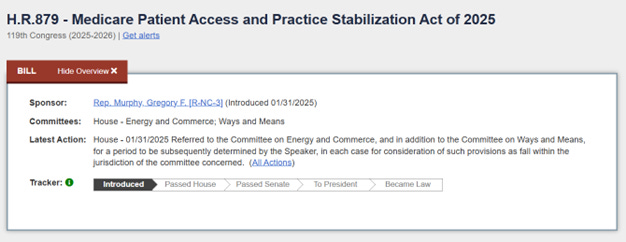
On the website, you can click around a bit more. Here’s what you find about this piece of legislation:
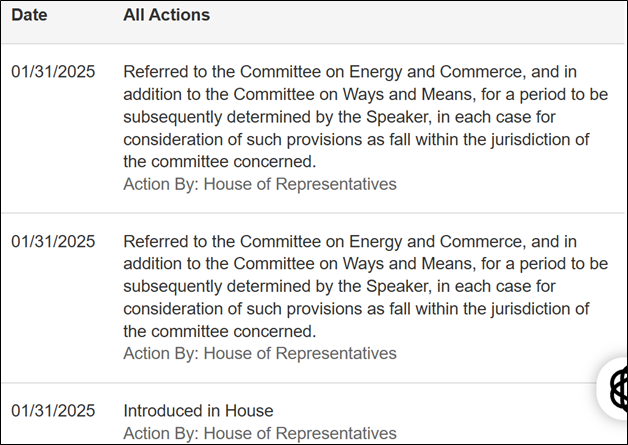
This bill – which had 155 cosponsors from both political parties – was introduced in the House on January 31 and referred to two standing committees –Ways and Means along with Energy and Commerce – where NOTHING HAS HAPPENED AND NOTHING WILL HAPPEN. There have been no committee or subcommittee hearings, and no such hearings are scheduled. This is called “dying in Committee.” Members wanted to be able to claim to be supportive of this bill, but no one is actually expending any time or political capital to push it through the process, so it languishes in Committee where it will live out the rest of its Hobbesian life (solitary, poor, nasty, brutish, and short).
And here’s the other bill:
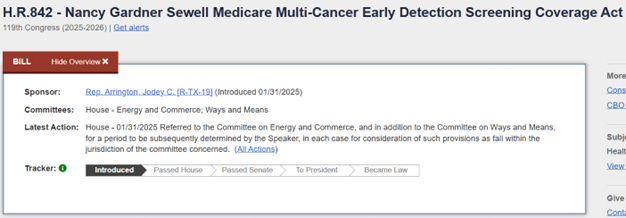
And because you are all sharp and not easily fooled, the details about this bill will come as no surprise to you:
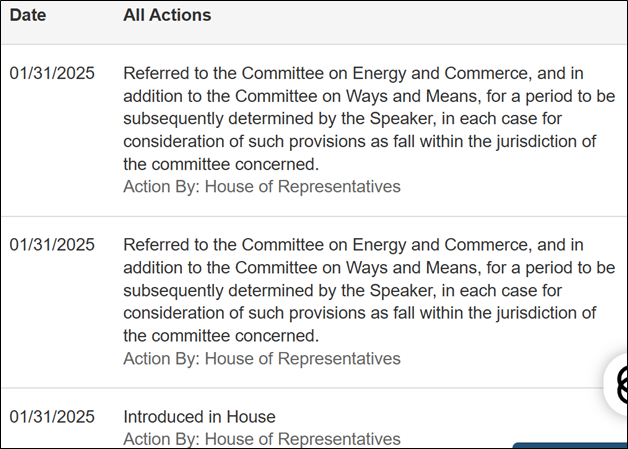
This bill (which garnered 176 cosponsors from both parties) met the same fate as the previous bill. It was introduced and referred to the same two committees on January 31, and it will also die in committee.
So far as I can tell, there are no parallel Senate bills to either of these pieces of legislation. When legislation is high priority, the House and Senate bills are dealt with in tandem in both houses so they are ready to be melded into a piece of legislation that will be sent to the President for his signature. This legislation is not on a path that will lead to passage.
Congressman Wittman knows this. He’s been in Congress for almost 20 years, and he knows the process. He knows that these bills are going nowhere. He’s assuming his constituents don’t know this.
Go back and look at the clause in boldface type at the beginning of this essay. He’s pretty sure most of his constituents won’t read past this, and they certainly won’t click on the series of links that will take them to the actual action on the bill.
If we want to know how our representatives in Congress feel about an issue, we should pay attention to how they vote and not to their press releases. In the first Trump administration, Congressman Wittman voted with Trump 91% of the time. Most significantly, he sided with Trump several times in his attempt to overturn the 2020 election, including a vote to throw out the electoral votes of Pennsylvania on January 6.
During this session, Wittman’s support for the Trump administration has decreased a bit, but it’s not clear how many of these were arcane procedural votes rather than substantive policy votes. He has voted in lockstep with Speaker Johnson in all budget votes so far – including yesterday’s vote to adopt a framework that is not possible without including cuts in the very programs Wittman is pretending to support in this email.
And don’t be fooled. These cuts will not be carefully and scrupulously targeted at fraudulent and wasteful spending. This administration has fired all of the people (beginning but not ending with the IGs in the agencies) whose job it was to identify such spending. These cuts will be thoughtless and draconian, as we’ve seen in the three months Trump has been President. They have had to hire back people wrongfully fired, reconstitute agencies thoughtlessly disbanded, and expend enormous amounts of court time to deal with the fact that they randomly deported people and now can’t seem to get them back.
This is all the opposite of efficient. The problem, of course, is that once benefits are suspended, people will have suffered, and some will have died because of these cuts. Restoring the cut funds will not restore the status quo ante. Not by a long shot.
“We are all born ignorant, but one must work hard to remain stupid.” Benjamin Franklin
Same old disingenuous B.S. we’ve received over and over again from this sorry excuse for a “representative”