
Privateers
250 Years Ago

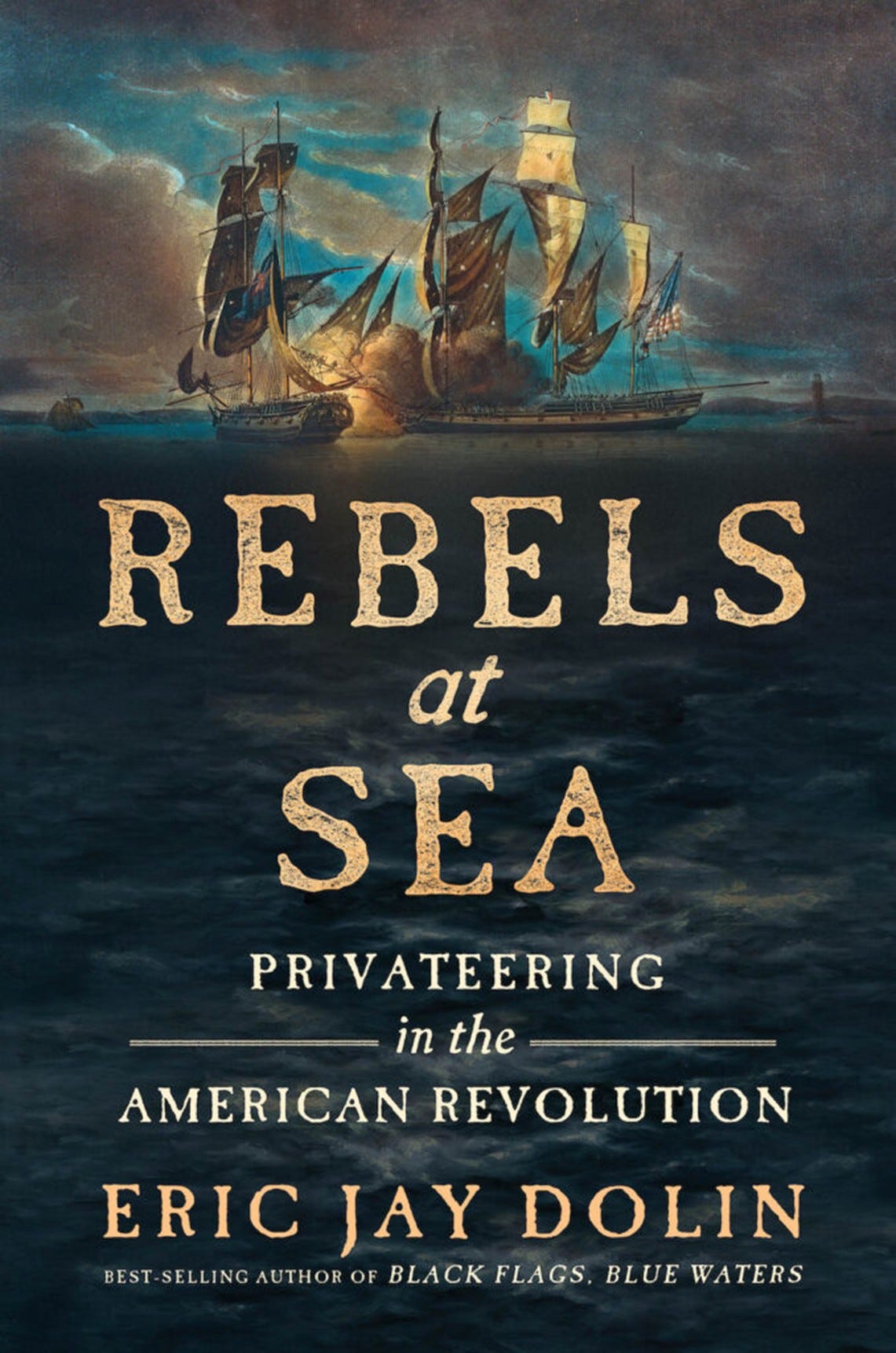
On November 25, 1775, the Second Continental Congress adopted a set of resolutions that formally legalized and regulated American privateering – basically giving the rebellion a lawful way to fight Britain at sea and profit from it. This turned privateering from an ad-hoc practice into an officially authorized, court-regulated, profit-sharing war strategy against British shipping.
Here’s what Congress did that day:
Declared British naval and supply shipping legitimate targets. Congress resolved that British warships and armed vessels operating against the colonies, if captured, were to be seized and forfeited. It also made British transport ships carrying troops, arms, ammunition, or provisions liable to seizure, and their cargoes confiscated.
Required commissions (letters of marque). No ship’s captain could legally “cruise for prize” (i.e., act as a privateer) unless he had a commission from Congress or from an authority Congress designated in a colony. This is the moment privateering becomes an officially sanctioned arm of the war.
Told the colonies to set up prize/admiralty courts. Congress recommended that each colony create (or empower) courts to decide whether captures were lawful and to handle condemnation and sale of prizes.
Set rules for where cases and appeals would go. Trials were to occur in the colony where the prize was brought in, with procedures for captures on the high seas and a right of appeal to Congress.
Established how prize money would be split.
If a private vessel captured a prize at its own expense, the owners and crew kept it.
If a colony-funded vessel made the capture, one-third went to the captors and two-thirds to the colony.
If a Continental (Congress-funded) vessel captured a prize, one-third went to captors and two-thirds to the United Colonies, with special rules for capturing enemy warships. Congress also confirmed earlier captures and laid out a detailed share schedule for officers and sailors.
This mattered because the Continental Navy was tiny in late 1775. It had only 2-4 vessels in actual operation, although several more ships had been authorized. Congress had no choice but to rely on private enterprise to harass British commerce, seize supplies, and raise morale and money. These resolutions provided the legal backbone for thousands of privateering cruises that followed.
Legalizing privateering didn’t mean a free-for-all on the high seas; a private ship could not legally attack an enemy ship unless the owners went through a few steps.
The owners had to apply for and receive a commission (officially, a letter of marque or reprisal) from either the Continental Congress or a colonial/state government acting under the authority of Congress. With a commission, any attack was simply piracy. To obtain one, owners had to do the following.
Describe the vessel (tonnage, crew, armament)
Provide a security bond to ensure they would obey the rules
Swear not to attack neutral or American ships
Agree to bring all prizes before a proper court for adjudication
Privateering vessels were privately financed, so they had to be prepared (“fitted out”) by their owners. This meant owners bore the cost of
Cannon and small arms
Extra sails and rigging
Provisions for long cruises
Recruiting a crew (often 40-200 men)
The focus was to threaten British commerce by attacking the following targets (they usually avoided full Royal Navy ships unless it was unavoidable):
Merchant ships
Troop transports
Supply ships
Fishing fleets (especially of Nova Scotia)
West Indies and Atlantic trade routes
When they overhauled a target, this is how they captured a prize:
They fired a warning shot or chased the vessel until it surrendered
A boarding party secured the ship
The captain inspected papers to prove it was a lawful enemy vessel.
A prize crew from the privateer was put aboard the captured vessel – usually an officer and several sailors.
The captured ship was sailed to the nearest prize port.
Then the captured vessel was taken to a Prize Court for a decision about whether it was a lawful prize. These cases were handled in state admiralty courts, with appeals to Congress. Here’s what the court did:
Examined a ship’s papers
Took testimony
Determined if the ship was actually British, if its cargo was lawful, and whether the privateer obeyed the rules of war. If legal, the court condemned the vessel and cargo. If not , it was retured to its owners and the privateer was liable for damages.
Once the ship was condemned, the ship itself, any cargo, and any specie or coin found aboard were sold at auction.
The profits were divided among the various individuals or groups involved. Some captains and investors became very wealthy, and the possibility of this great wealth provided the incentive that made privateering so popular.
Ship owners got 1/3-1/2 of the net profit
The Captain and Officers received fixed (and often large) shares
The crew received small shares (e.g., one share for a sailor, two shares for a gunner, and so forth.
The prize crew (the ones from the privateer who boarded the captured ship) received extra compensation for the risk of sailing the captured ship home.
Privateering was economically and strategically important.
The Continental Navy was tiny
Capturing British supply ships deprived the enemy and fed the American army.
Privateering disrupted the entire British Atlantic economy
Privateering boosted morale and filled government coffers indirectly
By the end of the war, approximately 1,700 American privateers had captured about 2,000 British ships.
As I noted above, privateering was a way for individuals to accumulate great wealth. Many leaders during the revolutionary era invested in privateers, including national figures like George Washington, John Hancock, Robert Morris, Benjamin Franklin, Thomas Jefferson, Samuel Adams, John Adams, and John Paul Jones. Several state governors joined this group – Patrick Henry of Virginia, James Bowdoin of Massachusetts, and Nicolas Cooke from Rhode Island. High-ranking military officers joined the fun: Henry Knox, Israel Putnam, Nathanael Green, and Benjamin Lincoln
Privateering was popular because it was patriotic, legal, socially respectable, and incredibly profitable. As is likely with any profitable operation, some individuals operated on the shady side of things – either by becoming extra-legal pirates who ignored their commissions and simply seized any ships, operating with fraudulent commissions, or ignoring the prize court rules and keeping the vessel and cargo for themselves.