
Opening Day

“Opening Day” can have a variety of meanings:
Ev'ry duke and earl and pyah is hyah
Ev'ryone who should be hyah is hyah.
What a smashing, positively dashing
Spectacle: the Ascot op'ning day.
Or:
Take me out to the ballgame
Take me out with the crowd
Buy me some peanuts and crackerjack
I don’t care if I never get back
But that’s not what I’m writing about today. My focus instead is on today’s opening meeting of the 2025 Virginia General Assembly, including some information about the structure of the legislature and some of the political framing for this year’s business. I’ll write about the substance of this legislative session over the next couple of months.
I wrote this on Tuesday, while some special elections were going on in Virginia that could have changed the political dynamic in Richmond. I boldly wrote it as if the expected result would be the actual result and that the Democrats would maintain their control of the State House and Senate. If I’m wrong, I’ll include a picture of me with egg on my face right here.

Virginia’s part-time legislature meets for 60 days in even-numbered years (the long session, which develops a 2-year budget) and 30-45 days in odd-numbered years (the short session, which focuses on budget amendments and other pressing matters). So this year is a short-session year.
Here’s the political scene in Virginia:
The GOP holds the statewide offices: Governor Glenn Youngkin, Lieutenant Governor Winsome Earle-Sears, and Attorney General Jason Miyares. Youngkin is term-limited and can’t run again, Earle-Sears will be the GOP nominee for Governor in 2025, and Miyares is running for a second term as Attorney General
The Democrats hold razor-thin majorities in both houses of the General Assembly: 51-49 in the House of Delegates and 21-19 in the State Senate. There were three Special Elections yesterday (Tuesday, January 7) to fill seats vacated when incumbents were elected to the House of Representatives in November of 2024. Two of these seats were in the House of Delegates and one was in the State Senate. Two of these districts were in Loudoun County in Northern Virginia, a thriving exurb of Washington DC that currently holds the title of wealthiest county in the United States with a median household income of $147,111. The other was in the Richmond suburbs. Here’s a summary of these elections.
Senate District 32 (Loudoun County)
Incumbent Democrat Suhas Subramanyam was elected to the House of Representatives in the 2024 election. The two candidates running to replace him were Democrat Kannan Srinivasan and Republican Tumay Harding. Srinivasan stepped down from his seat in the House of Delegates to run for the State Senate seat, triggering a special election for his old seat.
This district is a Democratic Party stronghold, and Srinivasan won convincingly.
House of Delegates District 26 (Loudoun County)
As I noted above, incumbent Democrat Srinivasan stepped down to run for the State Senate. The two candidates running to replace him were Democrat J. J. Singh and Republican Ram Venkatachalam. This district is also a Democratic Party stronghold, and Singh won here as well.
You’ve probably noted the names of the candidates in these races; Loudoun County is home to one of the largest Indian-American populations in the U.S., with 11% of the population reportedly identifying as such. According to one source, this is the fifth-highest proportion of any county in the nation, although I’m having trouble verifying this statistic. But the actual number probably doesn’t matter; the surnames in this election make the point.
Senate District 10
This district covers a wide swath of Virginia between Richmond and Charlottesville – the entirety of the counties of Amelia, Appomattox, Buckingham, Cumberland, Fluvanna, Goochland, and Powhatan and portions of Hanover, Henrico, Louisa, and Prince Edward. It was represented by Republican John McGuire until he resigned on January 3, 2025, when he was sworn into the House of Representatives. Two candidates contested this seat – Democrat Jack Trammell and Republican Luther Cifers.
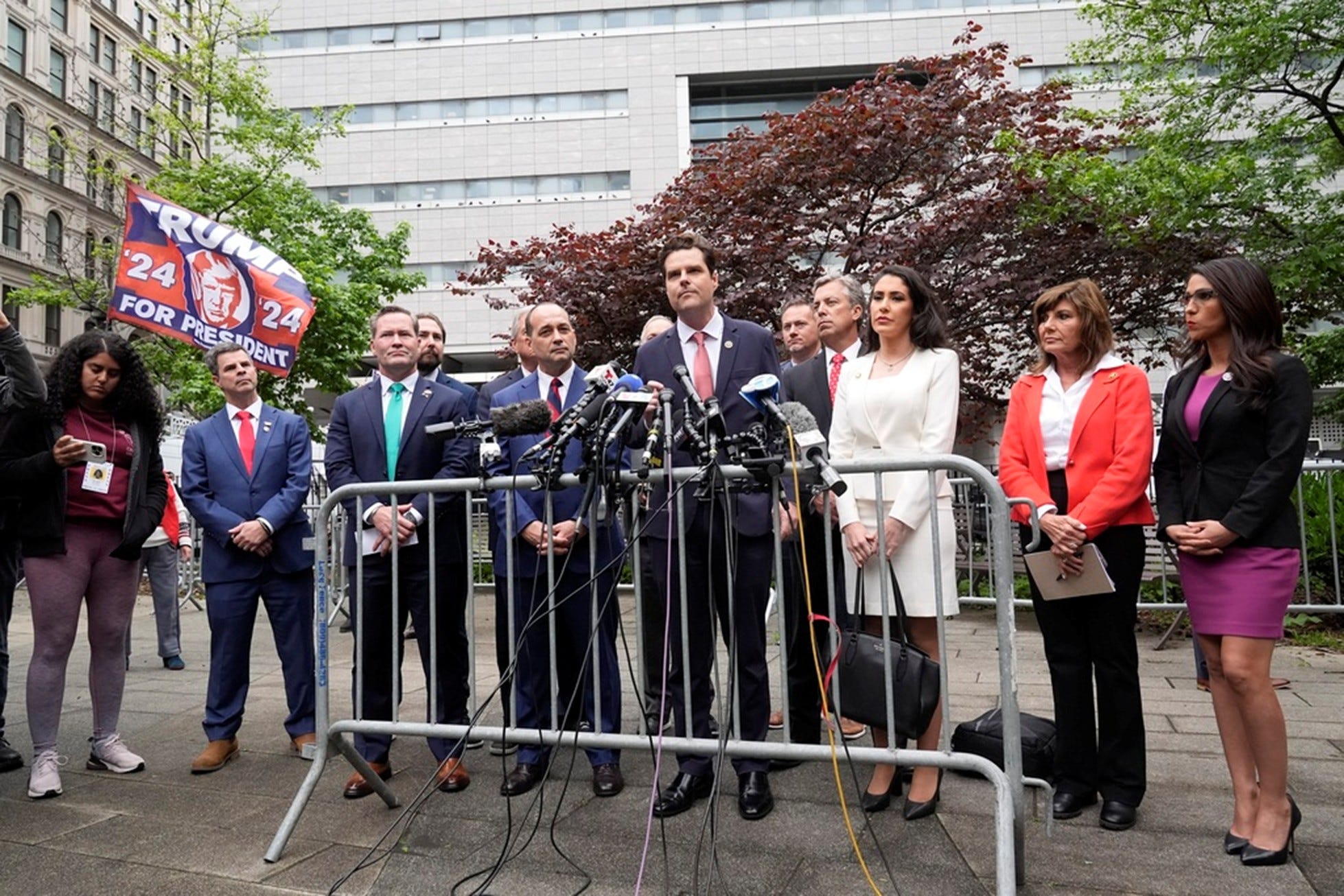
McGuire was expected to win this seat easily, which he did; Trump carried this district by 27 points last fall. McGuire is best known in Virginia because he defeated Republican incumbent Bob Good by 374 votes in a nasty primary. Good had been chairman of the House Freedom Caucus, but his ill-advised endorsement of Ron DeSantis in the Republican Presidential primary earlier in 2024 led to a Trump-endorsed primary challenge from McGuire.
The pettiness of today’s GOP is hard to imagine – although we don’t have to imagine it. We can see it. In 2024, Good was kicked out of the grand opening of a Trump memorability store in the town of Farmville (no, that’s not where Superman lives) while McGuire was welcomed.
Two things are important about the outcome of these elections.
First, by retaining their hold on the General Assembly, the Democrats can continue to slow down the rightward march of the Virginia GOP. If the GOP had a governing trifecta in Virginia, they would undoubtedly try to implement parts of the MAGA agenda in my state, including restrictions on women’s health care and rolling back regulations on firearm safety, environmental policy, criminal justice, and voting rights. By maintaining their control of the General Assembly, Virginia Democrats can put some anti-MAGA teeth into the “let the states decide” slogans of MAGA world. Until, of course, Trump changes his mind (mind?) and says that he supports the states only when they do MAGA things. It’s coming. You know it is.
The second important thing is that this is a Firebell in the Night (I’m quoting Jefferson here. If you’re writing about politics in Virginia, you have to quote Jefferson. Sorry, I don’t make the rules). It is signaling that the Democrats are not going to play dead after 2024. The off-year state-wide November elections in Virginia are often the first referendum for a newly elected national government. Virginia elects its statewide offices (Gov, LtGov, AG) along with its House of Delegates in the year following the Presidential election. The state has a history of electing a governor of the party that did not win the presidency the previous year; this pattern has held for more than 30 years (except in 2013, when Virginia elected a Democrat, Terry McAuliffe, in the year after Obama’s second win.)
It would not be surprising – and it wouldn’t predict all that much although it would make me happy – if the Democratic gubernatorial candidate (former House of Representatives member Abigail Spanberger) won the governor’s race. Those would not be very meaningful tea leaves. It would be extraordinarily important, however, if the GOP won (any) of these elections in 2025. If you live in Virginia, these are the elections you need to focus on.
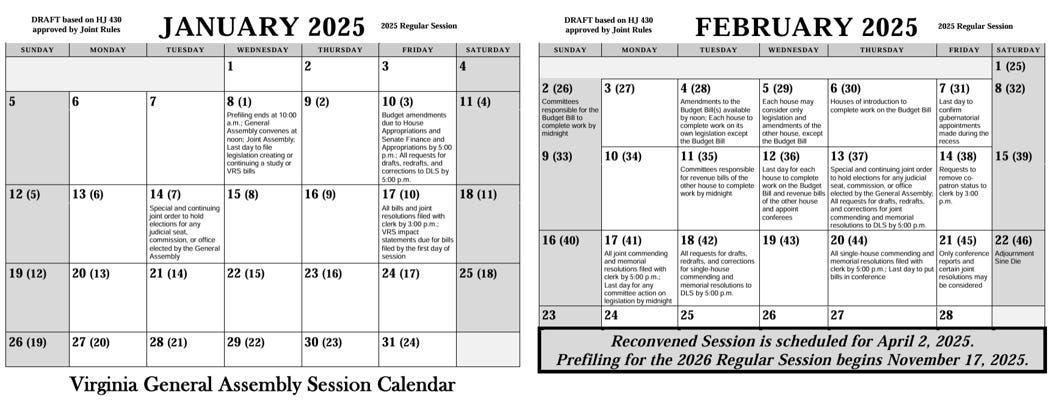
Here is the legislative calendar for this session. The most important dates are Opening Day (today, January 8), Crossover Day (Tuesday, February 4, when bills passed in one house have to cross over to the other house), Adjournment Day (Saturday, February 22), and Reconvened Day (Wednesday, April 2), when the General Assembly meets to override any vetoes by the Governor. Sessions frequently don’t end exactly on time, as negotiations over legislation can drag on.
If you’re in Virginia, you should be following the General Assembly and writing, calling, or visiting your state representatives to let them know what you think. If you’re not in Virginia, you also have a state legislature.
If the Republicans control any part of your government, you need to pay attention. This week, for example, the GOP-controlled state Supreme Court in North Carolina voted against certifying the victory of a Democratic candidate for a state judgeship. These things often fly under the radar but they need attention.
If the Democrats control your state government, you need to bolster your representatives and statewide officials against the MAGA attacks that will undoubtedly come their way. Even in the states that elected Democrats most handily — Vermont (66.1%), California (65.3%), Hawaii (63.7%), Maryland (62.5%), Massachusetts (61.2%), Washington (58%), Illinois (57.5%), New York (55.9%), Oregon (56.1%), and Rhode Island (55.5%) — Republicans made up anywhere from 1/3 to 45% of the voters. This number of voters can have a lot of influence in a state legislature.
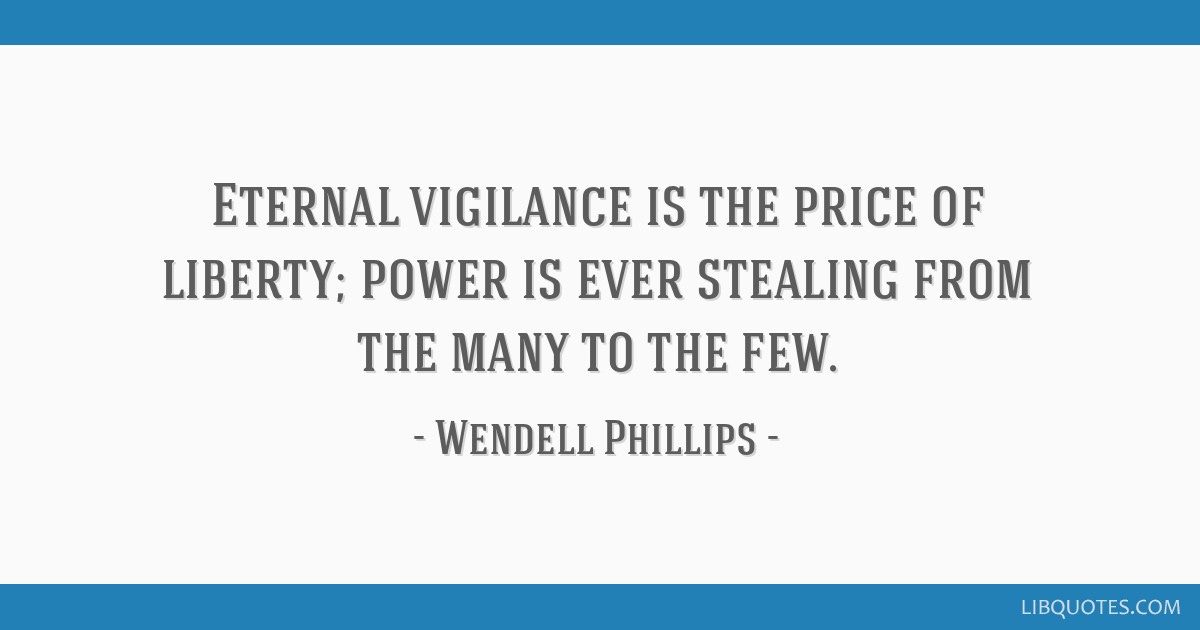
Exactly right. I'm happy with the results of the special elections, but I'm not smug about them. We must communicate with our reps with brief, pointed, fact-filled information. During this short session, there is much to cover on the voter front. Must get to it.
Eggless indeed, but a very cute picture!