
Oops, They Did It Again

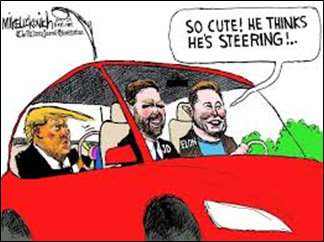
This morning I had planned to write about how the mainstream media are caving to Trump’s lawsuits claiming ‘defamation’ and his hurt fee-fees. But I went in another direction because of events from the last couple of days that presage a government shutdown over Christmas. I knew I had written about this issue in earlier In My Opinion posts, and decided to present them to you again. They contain pretty much everything I would write in a new post, and have the added benefit of taking me very little time.
First, let me frame this week’s events. Once again, Congressional lawmakers discovered that kicking the can down the road doesn’t actually make the can go away. If they keep meandering along the road, they will encounter the can again. In this case, the “can” is the constitutional requirement that Congress pass the federal budget each year. Budgeting is the hard work that encompasses most of what Congress is required to do. But the subject is arcane and boring; it gets much less TV coverage than staging stunts around people who want to pee in the Capitol Building. The public generally doesn’t understand the budget process, which includes terms like the following:
Appropriations - Legislative authorization to spend government funds.
Baselines - Projections of future revenue and spending levels under current laws.
Budget Authority - Legal authority to commit or spend government funds.
Budget Caps - Limits set on discretionary spending in budget resolutions or laws.
Continuing Resolution (CR) - Temporary funding legislation to keep the government running in the absence of formal appropriations.
Debt (or National Debt) - The total amount of money the federal government owes to creditors, resulting from accumulated deficits minus any surpluses. It is the sum of all past budget deficits minus any surpluses.
Debt Ceiling - A limit set by Congress on the total amount of debt the federal government can incur.
Deficit - The shortfall when expenditures exceed revenues in a fiscal year.
Deficit Reduction - Measures aimed at lowering the budget deficit.
Discretionary Spending - Spending set by annual appropriation levels.
Earmarks - Funding allocated for specific projects or purposes, often within lawmakers’ districts.
Fiscal Year - The 12-month period used for federal budgeting, running from October 1 to September 30.
Mandatory Spending - Spending required by existing laws, such as Social Security or Medicare.
Offsetting Receipts - Funds collected by the federal government that offset spending.
Outlays - Actual disbursement of funds as expenditures.
PAYGO (Pay-As-You-Go) - A rule requiring that new legislation does not increase the federal deficit.
Reconciliation - A legislative process to adjust revenue and spending levels to align with the budget resolution.
Scorekeeping - The process of estimating the budgetary effects of legislation.
Sequestration - Automatic spending cuts triggered by exceeding budget caps.
Supplemental Appropriations - Additional funding provided outside the regular budget process, often for emergencies.
Surplus - When revenues exceed expenditures in a fiscal year.
This year’s budget kerfuffle is even more complicated than usual because of the transition to the second Trump term, the expected (but still disappointing) eagerness of the GOP on the Hill to kowtow to MAGA, and the interference of Elon Musk, Puppeteer-in-Chief. Keeping all of that in mind, here are three posts I’ve written about budgeting – one in 2022 and two in 2023. You can take elements from these posts and string them together to understand what’s going on today.
A Broken Process (March 16, 2022)
The GOP Clowns Are Terrifyingly Unfunny (May 19, 2023)
10-9-8-7-6-5-4-3-2-1-SHUTDOWN! (November 10, 2023)
Great cartoon!