
No Canada
250 Years Ago

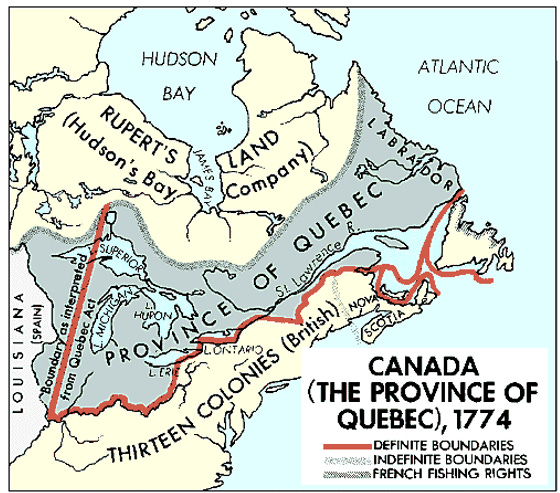
In the winter of 1775-76, the leaders of the rebellious colonies were working to improve their chances of winning the developing conflict with Britain by attempting to persuade neighboring British colonies – East Florida, West Florida, and Quebec – to join in the rebellion. In the summer of 1775, the Continental Congress authorized a two-pronged invasion of Quebec. I wrote about the developing situation in Quebec several times in 2025 – September 16, December 2, and December 30. Check them out if you want to refresh your memories.


After a disastrous defeat on December 31, 1775, the American forces under General Benedict Arnold maintained an ineffectual siege of the city. In March of 1776, General Arnold was sent to Montreal as another American officer, Major General John Thomas, was appointed to replace Arnold in Quebec.
Over the course of the winter, the people of Quebec came to dislike the American military presence in their city. Nonetheless, the Continental Congress still thought there was a possibility that Canada could be persuaded to join the Patriot cause – if only because the French-speaking Canadians were unhappy with British rule.
Following up on their belief, the Congress appointed a three-man commission, made up of Benjamin Franklin, Samuel Chase (of Maryland), and Charles Carroll of Carrollton (Maryland), a wealthy Catholic layman. They were unofficially joined by John Carroll, Charles's cousin and a Catholic priest. The composition of this commission was deliberate – the inclusion of the Carrolls signaled religious tolerance, and the inclusion of Franklin gave the commission international stature. The commission's instructions were threefold: promote the idea of Canada joining the rebellion as the 14th colony, consult with American commanders about the military situation, and counter British influence by emphasizing liberty, self-government, and religious tolerance.
This was not an easy trip – particularly for the 70-year-old Franklin. They left Philadelphia in late March and traveled through New York, Lake Champlain, and then on to Montreal. They arrived at the end of April to find the American army weakened and disorganized. Enlistments were expiring, and British reinforcements were arriving daily. The civilian reaction was not enthusiastic either. Franklin fell ill shortly after their arrival in Quebec, so the mission was crippled almost from the beginning.
When they left Philadelphia, the patriot leaders believed there was a chance to bring Quebec over to the American side. By the time they arrived in Montreal, however, things had changed – for the worse. The American military position was in a state of collapse, so there was no credible force to back their promises of support from Congress. Canadians had fewer grievances than the commission expected, and they had a lot to lose from protracted instability and disorder. In addition, smallpox devastated the American troops.
On May 6, British reinforcements arrived at Quebec to break the American position. At that point, American forces began a general retreat up the St. Lawrence River. By the middle of May, the commissioners had concluded that they could not gain anything politically and that remaining in Canada served no purpose. Franklin was the first commissioner to leave – largely due to health reasons.
Franklin apparently recovered, however. Upon his arrival in Philadelphia, he resumed his seat in the Continental Congress. In June, he was named to the Committee of Five responsible for drafting a Declaration of Independence – along with Thomas Jefferson, John Adams, Roger Sherman, and Robert R. Livingston. His editorial suggestions for the final draft are preserved in an existing copy of the document, and he was present for the vote for independence in July of 1776.