
Meanwhile . . .

Life goes on even while the current Republican president and his minions are trying to destroy the country they are purportedly leading.
This afternoon, members of my genealogy group are embarking on a project to kind of partner with the Colonial Williamsburg Foundation to fill a gap in their research capability. I say “kind of,” because CW is REALLY big and my group – the Williamsburg Area Genealogical Society – is really small. WAGS was formed in 2019, after I taught a genealogy class for the Osher lifelong learning program at William and Mary. After the class was over, a small group of members began to meet around Debbie’s dining room table to continue sharing our interest and enthusiasm for family history research. In 2024, we accomplished two important tasks: we published a book of essays written by our members, and we became a 501(c)(3) nonprofit organization. A couple of weeks ago, we sponsored our first conference. We have grown to more than 70 members and are going strong.
This afternoon we’ll be sponsoring an information table at CW’s Rockefeller Library. That’s the research library that provides support to the historians and other CW employees who work tirelessly to provide accurate historical information to tourists and local residents alike.
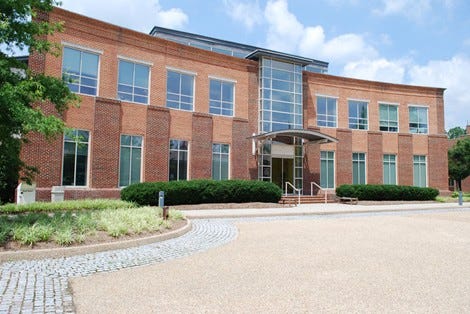
CW is currently focused on two historical celebrations. Along with the rest of the country, CW is offering programming in celebration of the 250th anniversary of the signing of the Declaration of Independence. CW is also celebration a more local accomplishment – 2026 is the 100th anniversary of the restoration of the historic area of Williamsburg to what it could have been like in the 1770s.
Here’s a quick recap of that story. The Reverend W. A. R. Goodwin, rector of Bruton Parish Church in Williamsburg, had been reassigned to Williamsburg after about 20 years elsewhere. When he has served the church in Williamsburg at the turn of the 20th century, the town was still the sleepy little burg that it had become after the capital of Virginia was relocated to Richmond toward the end of the American Revolution. Some of the buildings in the town were recognizable remnants of the town’s 18th century importance, but the town was otherwise indistinguishable from any other small southern town.
But when Goodwin returned in the 1920s, he saw lots of changes. There were gas stations and electric power lines along Duke of Gloucester Street, for example. He grew concerned – was the historic importance of Williamsburg in danger of being lost? Fortunately for all of us, Rev. Goodwin had a wealthy acquaintance – John D. Rockefeller, Jr.. Goodwin persuaded Rockefeller to visit him in Williamsburg. Rockefeller visited, Goodwin put on an apparently powerful sales pitch, and Rockefeller agreed to purchase property in the town to begin the process of restoration. And here we are today, 100 years later, in the town that has certainly moved beyond anything envisioned by Goodwin and Rockefeller.
So between our dual celebrations – the 250th and 100th – Williamsburg is a busy place this year.
Some of the members of WAGS (well, mainly Debbie and I) began to think about the gap between what CW is interested in. The foundation is clearly interested in the 18th century – that’s the reason it’s here – and it is also interested in the past 100 years as it plans to celebrate its success in creating the largest outdoor museum in the world.
Debbie and I began talking about the gap – the years between 1790 and 1926 – outside CW’s interest. I’m not saying that CW has to do everything, but in part because CW/Jamestown/Yorktown suck up all of the historical oxygen in the area, no organization is focused on genealogy questions focused on the intervening 136 years. There is no local “historical and genealogical society” as can be found in most counties across the country.
Genealogists know the value of these local organizations – generally small and underfunded and staffed by volunteers. They usually have small library collections with books and personal family records not available anywhere else, and their staff are often knowledgeable about how and where to access local records. When genealogists visit the communities where their ancestors lived, the local genealogical society is the first place they go.
But there is nothing like that in the Williamsburg area. Debbie and I decided to try to address this gap. The James City County Clerk of Court was our speaker at a recent meeting, because we need to know the records held at the courthouse. We have also sponsored a group trip to the Library of Virginia in Richmond, where other important records can be accessed. Over the past year, we have approached several individuals at CW, telling them that this gap exists and that members of WAGS can help bridge it. The director of the Rockefeller Library spoke to our group at a meeting this spring, and we are on the brink of offering genealogical research assistance for people who had ancestors in this part of Virginia. The Rockefeller Library has genealogy resources – it just doesn’t have the bandwidth to help people use them. https://research.colonialwilliamsburg.org/library/materials/topics/genealogy/
But WAGS is on the case. The Rockefeller Library is having its annual open house this afternoon from 3-6 pm, and WAGS will have a table there. Beginning next week (I think – Debbie and I will be talking about the schedule before the open house today), members of WAGS will begin offering weekly Office Hours at the Rockefeller Library. The director of the library really wants us to do this; visitors to the library often raise genealogy questions that the staff – largely historians or archivists but not genealogists – are not prepared to answer. The library’s collection contains a lot of information that would be valuable to people doing family history research, but that is not the purpose or the focus of the CW staff.
WAGS will begin to offer that assistance and focus. This will help CW and the people at the Rockefeller Library because more visitors and local residents will patronize the library, which is always good for funding in any corporate environment. This will also help WAGS, because people who encounter us at the library – particularly if we are helpful – will support and possibly join WAGS.
WAGS has a deeper goal – we would like CW to find a permanent space for us to use as a base of operations. We need a meeting space and an office space where visitors and local residents alike can find us. CW owns a lot of property in our community, and some of the spaces are currently empty. We’re thinking ahead – if we prove our utility to CW, they might offer us a permanent location somewhere near the library.
As you can probably tell, I’m proud of what WAGS has become over its short existence and excited about what comes next. Our inspiration is the New England Genealogical and Historical Society in Boston, which is probably the preeminent genealogy society in the country. This society, which occupies a couple of buildings not far from Boston Common, began with a group of people meeting around someone’s dining room table.
Great job, Karen and WAGS! I can see loads of folks taking advantage of this resourse.
I need this! Thank you!