
Haiti: A Primer

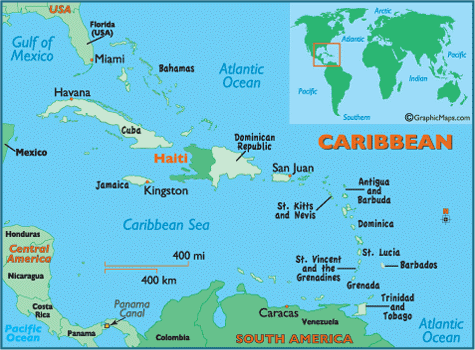
Haiti can’t catch a break. Natural disasters abound; if it’s not a hurricane it’s an earthquake. In addition, the nation’s history has fueled instability and corruption. Strong nations of the world — France in the 19th century and the United States in the 20th century — have employed policies that hindered Haiti’s ability to get on the track to prosperity and peace. Instability and corruption fueled poverty, which leads to crime. Haiti is a beautiful country with a vibrant culture and good people. But the country can’t catch a break.
Haiti is in the news now because of a bizarre story that #P01135809 and his GOP acolytes have made up and are now using to terrorize an immigrant community in the city of Springfield, Ohio. You’ve heard the story: illegal immigrants from Haiti are eating the pets belonging to the good people of Springfield. No matter how much this story is denied by the people who actually know what’s going on there, national Republicans continue to spread the story to push their anti-immigrant message. They don’t care about the facts – including that the thoughtless woman who first suggested that her missing pet cat, Miss Sassy, had been eaten by the Haitians, apologized to the Haitian community when she found Miss Sassy hiding in her basement.
But the damage was done. The weaselly J. D. Vance had picked it up, as had #P01135809 and his supporters. The city of Springfield has been terrorized for more than a week, as bomb threats and other threats of violence have forced them to close schools, cancel classes a colleges in the city, and postpone a community event scheduled for last weekend. The people in Springfield are generally okay about the Haitian immigrants in their town . They would like everyone to stop talking about this. #P01135809 hinted on Monday that he would like to hold a rally in Springfield. On Tuesday, the mayor of Springfield said he would prefer the former President go elsewhere. On Wednesday, #P01135809 announced that he was going to go to Springfield.
These events fueled cat memes on social media. People posted pictures of terrified dogs. I posted some of these images. But it’s not really funny, and I’m sorry I participated in that. SNL-style humor is not always appropriate.
This seems like a good time to review a bit of Haitian history.
Pre-Revolutionary Haiti (Saint-Domingue)
In 1790, the island of Hispaniola was divided between the French and Spanish. The western part, Saint-Domingue (modern-day Haiti), was under French control and had become one of the wealthiest colonies in the world. Its prosperity was built on the brutal system of plantation slavery, with over 500,000 enslaved Africans laboring to produce sugar, coffee, and other goods. While the economy thrived, tensions ran deep between various groups: the enslaved Africans, free people of color (many of whom were wealthy and landowners themselves), and the white colonial elite.
The French Revolution in 1789 sent ripples throughout the Atlantic world, including in Saint-Domingue. The ideals of liberty, equality, and fraternity stirred hopes among the enslaved population, while free people of color demanded more rights. In 1791, these tensions erupted into the Haitian Revolution, a complex and bloody conflict that would last over a decade.
Haitian Revolution (1791-1804)
The Haitian Revolution began in August 1791 with a massive slave uprising in the northern region of Saint-Domingue. Under leaders like Toussaint Louverture, formerly enslaved Africans waged a sustained fight against the French colonial forces. Louverture, a skilled military strategist and diplomat, initially aligned with the Spanish against the French but later switched allegiances when the French Republic abolished slavery in 1794.
By 1801, Louverture had established control over the entire island and enacted a new constitution, declaring himself governor for life. However, in 1802, Napoleon Bonaparte sent a large expeditionary force to reassert French control and reinstate slavery. Though Louverture was captured and died in France in 1803, the fight continued under new leaders like Jean-Jacques Dessalines and Henri Christophe.
In November 1803, the Haitian forces achieved a decisive victory over the French at the Battle of Vertières, and on January 1, 1804, Dessalines declared Haiti's independence, making it the first independent nation in Latin America and the Caribbean and the first to be founded by formerly enslaved people.
Post-Independence Haiti (1804-1843)
The aftermath of independence was marked by internal divisions and economic challenges. Dessalines became emperor of Haiti but was assassinated in 1806, leading to a split between northern and southern factions. Henri Christophe ruled the north as king, while Alexandre Pétion, a free person of color, governed the south as president. This division lasted until Christophe’s death in 1820 and the reunification of the country under President Jean-Pierre Boyer.
Boyer ruled Haiti from 1818 to 1843, a period during which he attempted to stabilize the country. In 1825, under immense diplomatic pressure, Haiti agreed to pay a crippling indemnity to France in exchange for recognition of its independence. This indemnity took the form of reparations paid to France for the property – the enslaved individuals – that had been taken away from France when Haiti won its independence. This debt, which took over a century to repay, severely hindered Haiti’s economic development.
Political Instability (1843-1900)
The mid-to-late 19th century was marked by chronic political instability, with frequent coups, short-lived governments, and struggles for power between competing factions. Haiti’s political turmoil stemmed from deep-seated divisions between the urban elite, who were largely of mixed European and African descent, and the rural masses, who were primarily of African descent and were often excluded from political power.
Despite these internal struggles, Haiti remained an important symbol of Black liberation and anti-colonial resistance worldwide. During the American Civil War, the U.S. government, though initially reluctant, eventually established formal diplomatic relations with Haiti in 1862, recognizing its sovereignty. This scared the living shit out of the leaders of the Confederacy, by the way – which was probably one reason why the government did it. The last thing the South wanted was for their enslaved population, which in some parts of the South made up as much as 90% of the population, to get ideas about freedom.
Recognition by the United States wasn’t enough. By the end of the 19th century Haiti’s economy had deteriorated, and its political system remained volatile. Nevertheless, the legacy of the Haitian Revolution endured as a powerful testament to the fight for freedom and equality, influencing other independence movements in the Americas and beyond.
The history of Haiti in the 20th century is one marked by political instability, foreign intervention, and efforts toward social and economic development. After gaining independence from France in 1804, Haiti endured years of internal conflict, political turmoil, and economic isolation. By the turn of the 20th century, the country faced severe challenges that would shape its trajectory for decades.
Early 20th Century: U.S. Occupation (1915-1934)
One of the most significant events of the early 20th century was the U.S. occupation of Haiti, which began in 1915. Instability and foreign interests, particularly concerning debt repayment and control of Haiti’s resources, led to the U.S. military's intervention. After a series of coups and assassinations, including the assassination of President Vilbrun Guillaume Sam, the U.S. deployed troops to establish order and safeguard its interests.
The U.S. occupation was justified as a means to restore stability and help modernize the Haitian economy, but it faced fierce resistance from the local population. The occupation force implemented new infrastructure projects, improved public health systems, and reorganized the country’s finances. However, it also imposed racial discrimination, repressed local opposition, and undermined Haitian sovereignty, fostering resentment. The occupation ended in 1934, leaving behind a mixed legacy of development and deepened social divisions.
The Rise of the Duvalier Dictatorship (1957-1986)
After years of political instability and short-lived governments, François "Papa Doc" Duvalier came to power in 1957. Duvalier, a physician with a background in ethnology, promoted himself as a defender of Haiti’s black majority against the mulatto elite. His regime, however, quickly turned into a brutal dictatorship. He established a personalist rule centered around his cult of personality and used the Tonton Macoutes, a paramilitary force, to crush opposition and instill fear. His government was characterized by widespread human rights abuses, including extrajudicial killings and the repression of political dissidents.
"Papa Doc" solidified his power through a combination of terror and populist rhetoric, using elements of Haiti’s Vodou religion to enhance his mystical authority. He ruled until his death in 1971, at which point his 19-year-old son, Jean-Claude "Baby Doc" Duvalier, assumed power.
Jean-Claude's regime, while less violent than his father’s, continued the authoritarian legacy. Corruption and embezzlement plagued the country, and economic mismanagement deepened poverty. While he made superficial reforms to placate international donors and increase foreign investment, the underlying issues of inequality and repression remained. By the 1980s, opposition to his rule intensified. Economic decline, growing discontent among the urban poor, and pressure from the Catholic Church and the international community led to widespread protests. In 1986, Jean-Claude Duvalier was forced to flee the country, marking the end of the Duvalier dictatorship.
Post-Duvalier Era and Democratic Struggles
The fall of the Duvaliers did not bring immediate stability. Haiti entered a turbulent period marked by military rule, attempted coups, and contested elections. In 1990, Jean-Bertrand Aristide, a former priest with a strong base among the poor, was elected president in the country’s first free elections. His presidency represented hope for a more democratic and socially just Haiti. However, his government was short-lived; in 1991, a military coup ousted Aristide, plunging Haiti into chaos once again.
Aristide returned to power in 1994 with the support of U.S. intervention under President Bill Clinton. This marked a brief period of democratic rule, but Haiti's political landscape remained fragile. Aristide was re-elected in 2000, but his second term was also marred by political violence, corruption allegations, and a loss of popular support. In 2004, another uprising forced him into exile, and Haiti entered yet another period of political instability.
Social and Economic Challenges
Throughout the 20th century, Haiti faced profound economic challenges. The country, once the wealthiest colony in the Caribbean, became one of the poorest nations in the Western Hemisphere. Deforestation, soil erosion, and over-reliance on subsistence farming contributed to environmental degradation. High levels of poverty, inequality, and limited access to education and healthcare hindered social progress.
Foreign aid played a crucial role in Haiti's economy, but it also created a dependency that complicated domestic governance. Political instability deterred investment, and efforts to reform the economy often fell short. By the end of the century, Haiti’s economic conditions remained dire, exacerbated by global economic shifts and internal governance challenges.
Haiti in the 21st Century
In the 21st century, Haiti has continued to face significant political, economic, and environmental challenges, while also striving for progress and stability. A major turning point was the devastating earthquake of January 12, 2010, which killed an estimated 230,000 people and displaced over a million. The earthquake crippled infrastructure and caused widespread destruction, requiring massive international relief efforts. Despite billions in aid, Haiti's recovery has been slow due to political instability, mismanagement, and corruption.
Politically, the country has experienced ongoing turmoil, with frequent protests, contested elections, and unstable leadership. Presidents like Jean-Bertrand Aristide, who was ousted in 2004, and Jovenel Moïse, who was assassinated in 2021, have reflected the volatility in Haitian governance. Post-Moïse, the country has struggled with gang violence, further destabilizing the situation.
Economically, Haiti remains one of the poorest countries in the Western Hemisphere, relying heavily on remittances and international aid. High unemployment, food insecurity, and limited access to healthcare and education persist.
This 20-minute video will give you a good overview of all of this.
So Why are Haitian immigrants in Springfield, Ohio?
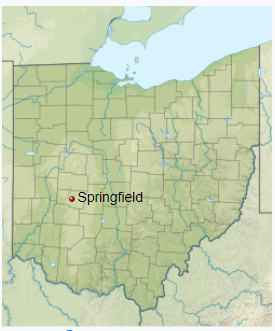
The Haitian population in the Springfield area is estimated to be between 15,000 and 20,000 people. They have provided a boost to a city that was in economic trouble, having lost both industry and population over the last decade. While the immigrants have been generally welcomed by the longtime residents, there has been some resentment at the fact that they are taking factory jobs, driving up housing costs, worsening traffic, and straining city services. Community organizations have hired significant numbers of Haitian Creole translators. Employers in the city, however, have welcomed the Haitian workers. They are generally reliable and hardworking.
First of all — contrary to what the toxic GOP is saying about them, they are in the United States under a special humanitarian program called Temporary Protected Status (TPS). TPS offers temporary legal status to individuals from countries experiencing conflict, environmental disasters, or other extraordinary conditions preventing safe return. Haiti has been designated for TPS several times since 2010 due to a series of crises. Politicians are free to disagree with TPS as a program or with its extension to Haitian immigrants, but their disagreement doesn’t negate the fact that the Haitian immigrants in Springfield (and elsewhere in the country) are here legally.
Following the devastating 2010 earthquake that killed hundreds of thousands and displaced millions, the U.S. granted TPS to Haitians already residing in the country. This status allowed them to live and work legally in the U.S. while Haiti faced recovery challenges. Subsequent extensions of TPS were made due to ongoing instability, including a cholera outbreak and political unrest.
In 2021, after the assassination of President Jovenel Moïse and another powerful earthquake, TPS for Haiti was extended again. The Biden administration recognized that Haiti's deteriorating conditions, compounded by gang violence and economic hardship, made deportations unsafe.
TPS does not provide a pathway to permanent residency or citizenship, but it offers Haitians work authorization and temporary relief from deportation. While the status has been a lifeline for many, it also creates uncertainty, as recipients live in limbo, awaiting decisions on future extensions or legislative solutions for permanent residency. If #P01135809 wings in November, he would almost certainly curtail or abolish TPS status for Haitian immigrants, throwing them into even greater confusion and uncertainty.
We really can’t let this guy win in November. I read something this morning that said the election will be decided in just a few states — Pennsylvania, Michigan, and Wisconsin. But votes haven’t been cast anywhere yet. We should not assume that this is somehow over in the rest of the country.
Tell your friends.
Great piece. Pitiful.
Tiger fan, what a great idea. Karen, I hope you can find a way to present at St. Bede. This information needs to be circulated.